Taste the Canyon: Where Rock Formations Meet Real Flavor
Have you ever tasted a place? At the Grand Canyon, the earth’s dramatic layers aren’t just a feast for the eyes—they shape the food, the culture, and the experience. Far beyond tourist traps, real flavors emerge where geology meets tradition. From sun-baked vistas influencing local ingredients to meals with views that elevate every bite, this is cuisine carved by nature. Come discover how one of America’s most iconic landscapes feeds both the body and soul.
The Grand Canyon’s Landscape: More Than Just a View
The Grand Canyon is not only a geological marvel but also a culinary one. Its immense rock strata, formed over 1.8 billion years, tell a story written in stone—but that story extends beyond sight. The canyon’s unique topography and climate shape how people grow, gather, and prepare food. With elevations ranging from 2,000 to over 8,000 feet, the region experiences dramatic shifts in temperature and moisture, creating distinct microclimates. These conditions favor hardy, drought-resistant plants and influence the availability of ingredients that have sustained human life for centuries.
At the higher elevations of the South Rim, cool pine forests give way to sagebrush and juniper as the land descends into the inner canyon’s arid depths. This vertical diversity supports a surprising range of edible flora. Piñon pines produce nutrient-rich nuts harvested each fall, while yucca and prickly pear cactus thrive in the lower, hotter zones. These native species are not just survivors—they are foundational ingredients in the regional food culture. Their resilience mirrors the perseverance of the Indigenous communities who have lived in and around the canyon for generations.
The Havasupai, whose name means “people of the blue-green waters,” have lived in Havasu Canyon, a tributary of the Grand Canyon, for over 800 years. Their traditional diet relies heavily on crops grown in the canyon’s rare fertile pockets, including corn, beans, and squash—often referred to as the “Three Sisters” in Native American agriculture. These crops are grown using dry farming techniques that conserve water and protect soil, reflecting a deep understanding of the land’s limitations and gifts. Similarly, the Navajo Nation, which borders the park, has long used juniper berries for both flavor and medicinal purposes, and their culinary traditions reflect centuries of adaptation to the high desert.
This deep connection between land and food means that eating in the Grand Canyon is never just about sustenance. It is an act of participation in a living tradition, where every bite carries the taste of survival, history, and harmony with nature. The canyon’s geology does not merely provide a backdrop—it actively shapes the flavors on the plate, making the region’s cuisine as layered and complex as the rock formations themselves.
Food with a View: Dining on the Edge of the Impossible
Dining at the Grand Canyon is an event in itself. Meals here are not just consumed—they are experienced. The sheer scale of the landscape transforms even a simple lunch into a moment of awe. At the El Tovar Dining Room, located on the South Rim, guests sit beneath handcrafted chandeliers and exposed wooden beams, looking out through expansive windows that frame the canyon like a living painting. The menu features Southwestern-inspired dishes such as grilled trout with roasted chilies and blue cornbread, but it is the view that elevates the experience. As the sun shifts across the canyon walls, turning them from amber to deep crimson, even the most seasoned travelers fall silent in reverence.
The sensory impact of dining at such elevations is profound. The crisp, thin air enhances the aroma of food, while the quiet—broken only by the distant cry of a raven or the rustle of wind through ponderosa pines—creates a meditative atmosphere. This is not background scenery; it is an integral part of the meal. A bowl of squash blossom soup tastes different when consumed overlooking a mile-deep chasm formed by the Colorado River’s relentless carving. The mind registers the vastness, and the body responds with a heightened awareness of flavor, texture, and temperature.
Even casual dining spots offer unforgettable moments. Bright Angel Bicycles & Café, near the rim trailhead, serves fresh smoothies made with local fruits and hearty wraps filled with grilled chicken, avocado, and roasted vegetables. Guests can eat at outdoor tables perched just feet from the edge, where the ground drops away into open space. The sensation of eating while suspended above the void creates a paradoxical feeling of vulnerability and connection—reminding visitors that they are small in the face of nature’s grandeur, yet fully present in the moment.
Seasonal changes further influence the dining experience. In spring, wildflowers bloom along the rim, and menus often feature lighter dishes with citrus and herbs. Autumn brings cooler temperatures and heartier fare—think butternut squash soup and slow-cooked stews. Some lodges even offer sunset dinners, where guests gather just before dusk to enjoy a multi-course meal as the canyon transforms under the golden light. These carefully curated experiences are designed not only to feed but to inspire, offering a rare opportunity to savor both food and philosophy in one sitting.
Native Flavors: The Heart of Canyon Cuisine
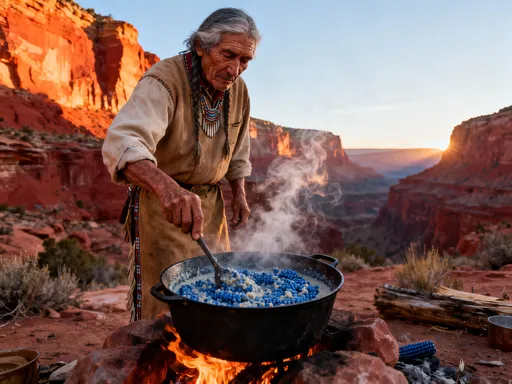
The true essence of Grand Canyon cuisine lies in its Indigenous roots. For centuries, Native American communities have cultivated a food culture that honors the land, its cycles, and its gifts. Their dishes are not museum pieces but living traditions, still prepared with care and shared with pride. Blue corn mush, a staple of many Southwestern tribes, is made by grinding dried blue corn into a fine meal and simmering it into a porridge. It is often served with honey or juniper berries, offering a subtly sweet, earthy flavor that reflects the region’s natural bounty.
Fry bread, though a more recent addition to Native diets, has become a symbol of resilience and adaptation. Introduced during the forced relocations of the 19th century, when tribes were given government-issued flour, sugar, and lard, fry bread emerged as a way to make nourishing food from limited resources. Today, it is a beloved part of cultural celebrations and everyday meals alike. At the Grand Canyon, visitors can find fry bread served in various forms—topped with savory meats and beans as a Navajo taco, or dusted with cinnamon and sugar for a sweet treat. Each bite carries the weight of history, a reminder of both hardship and survival.
Traditional cooking methods also remain in use. The Havasupai still harvest agave hearts, which are slow-roasted in underground pits for days, producing a sweet, caramelized flavor. This labor-intensive process is reserved for special occasions, but it speaks to a deep respect for food as both sustenance and ceremony. Similarly, Navajo cooks use open-fire roasting to prepare meats and vegetables, imparting a smoky depth that cannot be replicated in modern ovens.
Visitors can experience these flavors firsthand at tribal-operated food stands and cultural centers. Near the South Rim, small vendors sell handmade fry bread, prickly pear jam, and roasted corn, often accompanied by stories about their origins. These interactions are more than transactions—they are moments of cultural exchange. When travelers sit down to eat a Navajo taco at a roadside stand, they are not just tasting food; they are connecting with a people whose relationship with the land spans millennia. Supporting these vendors also helps sustain local economies and preserve culinary heritage in an age of mass tourism.
Off-the-Beaten-Path Bites: Hidden Eats Near the Rim
Beyond the well-trodden paths of Grand Canyon Village, small communities offer authentic culinary experiences that reflect local life rather than tourist expectations. In Tusayan, a town just outside the park’s entrance, family-run markets and cafes serve dishes made with regional ingredients. One such spot, a modest grocery with a deli counter, offers sandwiches on piñon nut bread—dense, slightly sweet, and rich with the flavor of toasted pine nuts. The bread is baked daily using a recipe passed down through generations, and the shop’s owner proudly explains how the nuts are harvested each autumn from nearby forests.
Further afield, in the remote village of Supai—reachable only by foot, mule, or helicopter—visitors can experience food in its most contextually rich form. The Havasupai operate a small café that serves simple but nourishing meals: beef stew, fry bread, and fresh lemonade made with locally gathered ingredients. There are no menus, no frills—just food prepared with care and served with warmth. Because supplies must be carried in, every ingredient is used thoughtfully, and waste is minimal. This necessity fosters a deep respect for food, a value that guests quickly absorb.
Along Highway 64, which leads to the South Rim, roadside stands appear during the warmer months, offering bison burgers, prickly pear jelly, and wildflower honey. Bison, raised on nearby plateaus, are well-suited to the arid climate and require less water than cattle, making them a sustainable protein source. The burgers are lean, flavorful, and often served on blue corn buns, creating a dish that is both delicious and deeply tied to the region. These stands are not polished attractions; they are working parts of the local economy, often run by ranchers or artisans who live off the land.
Another hidden gem is a small café in Valle, Arizona, about 30 miles south of the park. Known for its Navajo-style tacos and homemade salsas, the café draws both locals and informed travelers. The salsa, made with roasted green chilies and tomatoes, has a smoky heat that lingers pleasantly on the tongue. The owner, a member of the Hopi Tribe, shares stories of her childhood summers spent helping her grandmother dry corn and grind herbs. These personal touches transform a simple meal into a meaningful encounter, reminding visitors that food is not just fuel—it is memory, identity, and connection.
Cooking with the Canyon: How Terrain Shapes Technique
The Grand Canyon’s physical environment presents unique challenges for cooking, influencing everything from baking times to flavor development. At high elevations, the air pressure is lower, which means water boils at a reduced temperature—around 200°F instead of 212°F at sea level. This seemingly small difference has significant effects. Cakes rise too quickly and collapse, bread doughs over-expand, and pasta takes longer to cook. Chefs at canyon lodges must adjust recipes carefully, reducing leavening agents, increasing liquid, and lowering oven temperatures to achieve consistent results.
These adaptations are not new. Indigenous cooks have long understood how to work with the land’s constraints. Traditional earth ovens, used by the Havasupai and other tribes, rely on heated stones buried in pits to slow-cook food over many hours. This method is ideal for the dry, windy conditions, as it retains moisture and protects food from the elements. Meats and vegetables are wrapped in leaves or cloth and placed on the stones, then covered with earth to trap heat. The result is tender, smoky, and deeply flavorful—proof that limitation can inspire innovation.
Modern chefs in the region draw on both science and tradition. At Phantom Ranch, located at the bottom of the canyon, cooks prepare meals for hikers who have just completed the grueling descent. The kitchen operates with limited refrigeration and must conserve fuel, so menus focus on hearty, shelf-stable ingredients like beans, rice, and dehydrated vegetables. Yet the meals are far from bland. Seasonings like dried oregano, smoked paprika, and crushed red chilies add depth, while fresh herbs grown in small garden plots provide brightness. The cooks’ ability to create satisfying food under such conditions is a testament to their skill and resourcefulness.
Outdoor cooking, whether for ceremonial purposes or backcountry meals, also reflects adaptation. Hikers often use portable stoves, but they must account for the thin air, which reduces flame efficiency. As a result, boiling water takes longer, and meal planning must include extra time and fuel. Some visitors opt for no-cook meals—wraps, jerky, and energy bars—but those who take the time to cook are rewarded with a deeper sense of accomplishment. There is something profoundly satisfying about eating a warm meal after a long day on the trail, especially when that meal was prepared against the odds, with the canyon walls standing sentinel in the fading light.
Sustainable Sips: Local Brews and Botanical Drinks
Beverages in the Grand Canyon region are as distinctive as the landscape itself. Beyond bottled water and soft drinks, local producers are crafting drinks that capture the essence of the high desert. Juniper-infused ales, for example, are gaining popularity among regional breweries. The juniper berry, abundant in the pine forests around the rim, imparts a piney, slightly citrusy flavor that pairs well with malty brews. These beers are not just tasty—they are a celebration of local flora, turning a common shrub into a source of pride and flavor.
Cafes and roadside stands also offer non-alcoholic options rooted in tradition. Prickly pear lemonade, made from the fruit of the cactus, is a vibrant pink drink with a sweet-tart profile reminiscent of watermelon and raspberry. It is refreshing in the dry heat and rich in antioxidants, making it both delicious and nutritious. Yucca-blossom tea, less common but equally intriguing, has a mild, floral taste and is sometimes used for its soothing properties. These botanical drinks reflect a deep knowledge of the land’s edible plants and a commitment to using what is available in a sustainable way.
Some lodges have begun incorporating native ingredients into their cocktail menus. A rim-side bar might serve a “Canyon Sunset” made with mezcal, prickly pear syrup, and lime—a drink that mirrors the colors and flavors of the evening sky. These creations are more than novelties; they are invitations to engage with the region’s ecology through taste. By choosing drinks made with local ingredients, visitors support small producers and reduce the environmental impact of transporting goods from distant locations.
Water, of course, remains central to the experience. The Colorado River, which carved the canyon over millions of years, is a lifeline for both people and wildlife. While visitors are advised to drink filtered or bottled water, the presence of flowing rivers and natural springs underscores the preciousness of this resource. Many cultural teachings emphasize respect for water, and travelers are encouraged to minimize waste and leave no trace. In this way, even the act of drinking becomes part of a larger ethic of stewardship and gratitude.
Planning Your Flavor-Filled Canyon Trip: When, Where, and How to Eat Well
To fully experience the Grand Canyon’s culinary offerings, planning is essential. The best times to visit are spring (March to May) and fall (September to November), when temperatures are mild and crowds are smaller. Summer brings extreme heat, especially at the bottom of the canyon, and many outdoor dining areas become uncomfortable by midday. Winter can be cold, with snow on the rim, but it also offers solitude and the chance to enjoy warm stews and hot drinks by a crackling fire.
Reservations are key for popular dining spots. The El Tovar Dining Room often books weeks in advance, especially for dinner. Guests should make reservations as early as possible, particularly if they hope to secure a window table for sunset. For a more casual experience, the Arizona Room at Bright Angel Lodge offers buffet-style meals with canyon views and requires less advance planning. Packing smart is also important for hikers—lightweight, high-energy foods like trail mix, jerky, and energy bars are ideal, but adding a small treat, like a piece of fry bread or a jar of prickly pear jam, can make a rest stop feel luxurious.
Understanding the schedules of tribal vendors is equally important. Many operate seasonally or on limited hours, so checking availability in advance ensures visitors don’t miss out. When visiting Havasu Falls or Supai, for example, it’s wise to confirm whether the café is open and what meals are available. Respecting local customs—such as not taking photographs without permission or leaving offerings when visiting sacred sites—enhances the experience and fosters mutual respect.
For those camping or backpacking, meal planning should emphasize simplicity and sustainability. Using reusable containers, avoiding single-use plastics, and packing out all waste help protect the fragile ecosystem. Some travelers bring small stoves to prepare hot meals, while others opt for no-cook options to minimize impact. Regardless of method, the goal is to enjoy good food without compromising the land that makes it possible. By aligning their habits with the values of the region, visitors become part of a tradition of care and appreciation that stretches back centuries.
A Meal You’ll Never Forget—Because It Came from the Earth Itself
The Grand Canyon is more than a destination—it is a living, breathing entity that feeds the spirit as much as the body. To eat here is to participate in a story that began long before roads or lodges, a story written in layers of rock, wind, and resilience. Every meal, whether served on fine china or wrapped in foil, carries the imprint of the land: the crunch of piñon nuts, the tang of prickly pear, the warmth of fry bread fresh from the fryer. These flavors are not incidental; they are expressions of place, culture, and time.
Travelers who come seeking only views may leave impressed, but those who come to taste leave transformed. They carry with them not just photographs or souvenirs, but memories of shared meals, quiet moments, and unexpected connections. They remember the taste of juniper smoke on their lips, the sound of laughter at a roadside stand, the way the light changed over the canyon as they finished their soup. These are the moments that linger, long after the journey ends.
As tourism continues to grow, the challenge will be to preserve the authenticity of these experiences. Supporting local producers, respecting Indigenous traditions, and making sustainable choices are not just ethical actions—they are ways of honoring the canyon’s true flavor. The Grand Canyon does not belong to any one person or generation. It belongs to the earth, and to those who walk it with humility and gratitude.
Let your next adventure be one that engages all the senses. Let it be a journey not just to a place, but into a deeper understanding of how food, land, and culture are intertwined. At the Grand Canyon, every bite tells a story. All you have to do is listen—and taste.