Wandering Through Time: Kabul’s Forgotten Architectural Soul
You know that feeling when you step into a city and it’s like walking through layers of history? That’s Kabul. Between the ancient mosque courtyards and crumbling colonial-era villas, every alley tells a story. I didn’t expect to be so moved by its architecture—so resilient, so quiet, yet so full of character. This is not just about buildings; it’s about memory, identity, and the beauty that endures even after decades of hardship. In a place often reduced to headlines of conflict, the physical fabric of Kabul reveals a deeper truth: a city shaped by empires, faith, craftsmanship, and the quiet determination of its people to preserve dignity through design. To walk its streets is to witness time folded into walls, courtyards, and minarets.
First Impressions: Arrival in Kabul and the City’s Architectural Pulse
Descending into Kabul International Airport, the first sight is one of contrast—snow-dusted mountains cradling a city stitched together with brick, concrete, and corrugated metal. The urban sprawl unfolds in uneven waves, climbing the arid hillsides as if trying to reach the sky. From the airport road, the city reveals itself gradually: layers of settlement stacked over decades, each era leaving its mark in materials, form, and spatial logic. What strikes the observant traveler is not grandeur, but persistence. Buildings stand with patched walls, satellite dishes sprouting like antennae from rooftops, and laundry lines strung between balconies, turning utilitarian structures into intimate expressions of daily life.
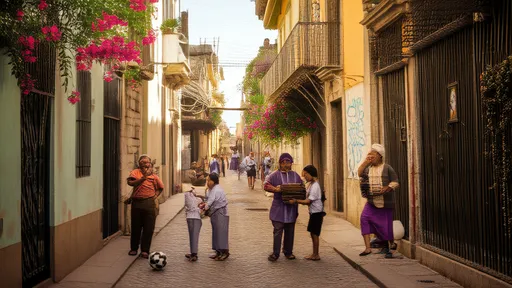
The architectural pulse of Kabul is irregular, shaped as much by necessity as by tradition. The outer districts feature modest compounds with high perimeter walls—practical responses to both security concerns and cultural values of privacy. As one moves toward the city center, the density increases, and older neighborhoods begin to emerge. Here, the streets narrow, often unpaved, winding through clusters of single- and two-story homes. The materials are humble: sun-dried brick, stone foundations, and wooden doors weathered by time. Yet even in their simplicity, there is order—each house oriented inward, its public face modest, its private heart hidden from view.
This duality defines Kabul’s built environment: the outer shell protective, even austere; the inner world rich with domestic life. The city does not announce itself with monuments or wide boulevards. Instead, it reveals itself slowly—in the curve of an arched gateway, the glint of a tiled dome at sunset, the sound of water dripping in a courtyard fountain. These are not tourist attractions; they are lived-in spaces, worn smooth by generations. The rhythm of the city is not hurried, but deliberate, shaped by prayer calls, market hours, and family routines. Architecture here is not separate from life; it is its container, its witness, and often, its refuge.
Traces of Empire: Colonial-Era Buildings and Their Quiet Presence
Scattered across Kabul are quiet remnants of the 20th century’s foreign engagements—buildings that speak of diplomatic ambitions, educational missions, and fleeting moments of stability. Constructed primarily during the mid-1900s, these structures reflect a blend of European sensibilities and local adaptation. Low-rise administrative offices, former consulates, and old school buildings feature red brick facades, arched windows, and wide verandas supported by simple stone columns. Many were designed by foreign architects working in collaboration with Afghan planners, resulting in a hybrid style that respected local climate and customs while introducing modern materials and layouts.
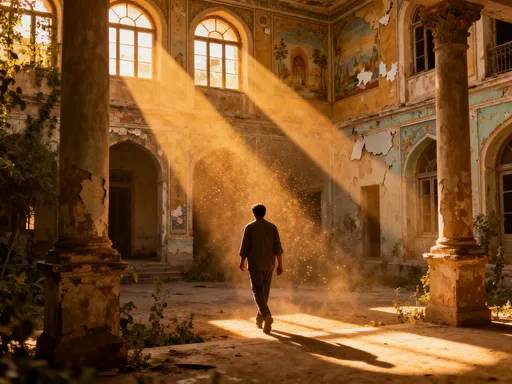
These colonial-era buildings do not dominate the skyline. They are integrated into the urban fabric, often repurposed for government use, private offices, or residential units. In Wazir Akbar Khan and Karte Parwan, some of the best-preserved examples still stand—though many show signs of neglect. Paint peels from window frames, roofs leak after rain, and gardens once meticulously kept now grow wild. Yet, even in decay, these structures carry a certain dignity. Their proportions remain harmonious, their interiors still lit by natural light filtering through tall windows, and their courtyards continue to serve as gathering spaces.
What is striking is how little fanfare surrounds these buildings. They are not labeled as heritage sites, nor do they appear on official tourism maps. Instead, they are simply part of the city’s background—used, adapted, and sometimes forgotten. A former British diplomatic residence now houses a ministry office; an old French cultural center operates as a language school. This quiet reuse speaks volumes about Kabul’s resilience. There is no nostalgia-driven preservation movement, no romanticization of the past. These buildings endure not because of sentimentality, but because they are still useful. Their survival is a testament to functional design and the pragmatic spirit of a city that values utility over ornament.
Islamic Geometry in Stone: Mosques and Religious Structures
If the colonial buildings whisper of foreign influence, the mosques of Kabul sing of enduring faith. These are not merely places of worship; they are architectural expressions of spiritual order, where geometry, light, and silence converge. The most prominent among them is the Friday Mosque, or Masjid-e-Jama, located in the historic heart of the city. Though not as vast as some regional counterparts, its courtyard layout, central dome, and slender minaret embody the essence of Islamic architectural tradition. The structure is oriented toward Mecca, its qibla wall adorned with intricate calligraphy from the Quran, carved into stone and painted in deep blues and greens.
Inside, the prayer hall is supported by rows of columns, creating a rhythm that guides the eye toward the mihrab, the niche indicating the direction of prayer. Natural light enters through high windows, casting shifting patterns on the floor as the day progresses. The acoustics are carefully calibrated—whispers carry, but so does the imam’s voice during sermons. This is architecture designed for contemplation, where sound, space, and symbolism work in harmony. The use of symmetry is not merely aesthetic; it reflects the Islamic worldview of balance, unity, and divine order.
Beyond the major mosques, smaller neighborhood prayer halls dot the city—simple structures with domed roofs and open courtyards. Many are built with locally sourced stone and brick, their exteriors unadorned but their interiors often rich with tile work. The craftsmanship in these mosaics is remarkable: hand-cut pieces of ceramic arranged into geometric patterns—stars, hexagons, interlocking circles—that seem to shift when viewed from different angles. These designs are not random; they are mathematical expressions of infinity, representing the boundless nature of the divine.
At prayer times, the architecture comes alive. The call to prayer echoes from minarets, reverberating through narrow alleys. Men gather in the courtyards, removing their shoes before stepping onto woven carpets. The scent of sandalwood sometimes lingers in the air, carried on the breeze from nearby shops selling incense. In these moments, the mosque is more than a building—it is a living space, a center of community, and a sanctuary from the city’s noise. Its architecture does not shout; it invites. And in a city that has known so much disruption, that invitation to stillness is itself an act of resistance.
The Courtyard Homes of Wazir Akbar Khan and Shahr-e Naw
Among Kabul’s most distinctive architectural features are the traditional courtyard homes found in neighborhoods like Wazir Akbar Khan and Shahr-e Naw. These residences, once common across the city, reflect a way of life centered on family, privacy, and seasonal rhythms. Built primarily for extended families, they are inward-focused—high walls enclose the compound, shielding the interior from public view. Entry is through a modest gate, often made of heavy wood reinforced with iron. Beyond it lies a different world: a central courtyard, usually paved with stone or brick, often shaded by a grapevine or mulberry tree, with a small fountain or water basin at its center.
The surrounding rooms open onto the courtyard through arched doorways or glazed windows. In older homes, wooden balconies—known locally as oriya—project slightly from upper floors, allowing residents to look down into the courtyard while remaining unseen from the outside. These balconies are often decorated with stained glass, creating patterns of colored light that dance across the walls in the afternoon. The interior walls are typically finished with lime plaster, which helps regulate temperature—cool in summer, warm in winter. Floors are covered with handwoven rugs, and seating is often low, arranged around central hearths used in winter.
What defines these homes is their relationship to time and season. In summer, families gather in the courtyard in the evenings, dining under the stars, children playing near the fountain. In winter, life moves indoors, with rooms heated by traditional stoves. The architecture supports this rhythm, with thick walls providing insulation and small windows minimizing heat loss. Even the placement of rooms follows social customs: guest areas are separate from family quarters, and women’s spaces are often located on upper floors or at the rear of the house.
Today, many of these homes have been altered or replaced by modern apartments. Yet in wealthier districts, some have been carefully maintained or restored. These surviving examples are not museums; they are lived-in spaces, adapted to contemporary needs while preserving their essential character. Satellite dishes may sit beside ornate wooden eaves, and solar panels might be installed on flat roofs, but the courtyard remains the heart of the home. It is here that generations gather, where stories are told, and where the past feels close enough to touch. In a rapidly changing city, these homes stand as quiet affirmations of cultural continuity.
Soviet Modernism and Post-War Adaptation
Another layer of Kabul’s architectural history emerged during the 1970s and 1980s, when Soviet influence brought a wave of modernist construction. Apartment blocks, institutional buildings, and schools were erected using prefabricated concrete panels, a hallmark of Eastern Bloc urban planning. These structures were designed for efficiency—stacked units with minimal ornamentation, flat roofs, and long corridors. At the time, they represented progress, a move toward urban modernity. Today, they stand as monuments to a complex past, their utilitarian forms now softened by decades of adaptation.
In neighborhoods like Karte Seh and Deh Afghanan, rows of these concrete buildings stretch across the hillsides. Their facades, once uniform, now display a patchwork of modifications. Residents have painted doors and window frames in bright colors—turquoise, crimson, golden yellow—adding warmth to the gray concrete. Rooftop extensions made of corrugated metal or brick have been added to create extra living space. Satellite dishes, water tanks, and solar heaters clutter the rooftops, turning them into functional landscapes of survival.
What is remarkable is how these buildings, originally designed for a different social system, have been reclaimed by Afghan families. The rigid Soviet layout has been reinterpreted: communal stairwells are now shared by extended kin, ground-floor units serve as small shops, and balconies are enclosed to create additional rooms. In some cases, families have combined adjacent apartments to form larger homes. These adaptations are not random; they reflect deep cultural values—privacy, family cohesion, and self-reliance.
Despite their origins, these buildings have become part of Kabul’s identity. They are not loved for their aesthetics, but for their resilience. They have withstood war, neglect, and extreme weather. And in the hands of their inhabitants, they have been transformed from impersonal housing blocks into homes. This process of adaptation is itself a form of architecture—one written not in blueprints, but in lived experience. It is a reminder that buildings do not define a city; people do.
Craftsmanship That Endures: Wood, Tile, and Plaster Artistry
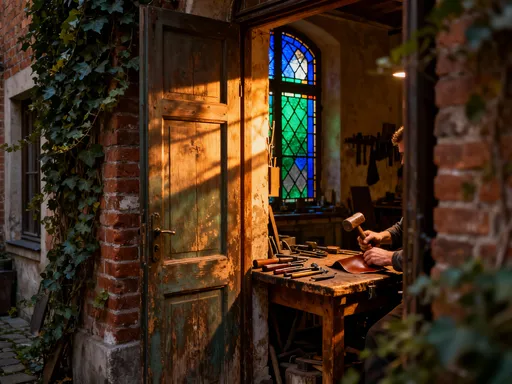
Beneath the surface of Kabul’s weathered facades lies a tradition of craftsmanship that refuses to disappear. In workshops tucked behind bazaars and in quiet corners of old neighborhoods, artisans continue to practice techniques passed down through generations. Woodcarvers shape walnut and cedar into intricate geometric panels, used in doors, ceilings, and balcony screens. Tile makers cut ceramic by hand, assembling mosaics with precision that rivals any machine. Plasterers apply stucco reliefs to walls, creating patterns of vines, stars, and floral motifs that catch the light in subtle ways.
These crafts are not merely decorative; they are acts of cultural preservation. A master woodcarver in the old city might spend weeks on a single doorway, chiseling each element by hand. His tools are simple—chisels, mallets, measuring cords—but his knowledge is vast. He understands the grain of the wood, the weight of the door, the way light will fall on the finished piece. When asked why he continues this work despite low pay and uncertain demand, he replies simply: “It is what my father taught me. If I do not do it, who will?”
Similarly, in the tile workshops of Istalif—just outside Kabul—artisans use traditional kilns to fire hand-cut pieces in cobalt blue, turquoise, and white. The process is labor-intensive: each tile is shaped, glazed, and fired individually. The resulting mosaics adorn mosques, homes, and public buildings, their colors deepening with age. Though modern ceramic tiles are cheaper and more readily available, many families still prefer the handmade variety, valuing its authenticity and warmth.
Plasterwork, or gach-boroosh, is another endangered art. Skilled workers mix lime plaster with natural pigments, then apply it in layers to create raised patterns on walls and ceilings. The designs often follow Islamic geometric principles, avoiding figurative representation in favor of abstract forms. These surfaces are not only beautiful; they are functional, helping to regulate humidity and temperature. Though few young people are learning these skills, there are signs of renewed interest. Some NGOs and cultural organizations have begun supporting artisan cooperatives, providing tools, training, and market access. These efforts are small, but they matter. In a city where so much has been lost, the survival of craftsmanship is a quiet victory.
Looking Forward: Heritage, Memory, and the Future of Kabul’s Built Environment
The future of Kabul’s architecture hangs in a delicate balance. On one hand, there is urgent need for modernization—safe housing, reliable infrastructure, and urban planning that accommodates growth. On the other, there is the imperative to preserve what remains of the city’s cultural soul. This is not about turning Kabul into a museum or catering to foreign tourists. It is about recognizing that architecture is memory made visible. When a courtyard home is demolished, or a mosque’s tile work replaced with synthetic panels, a piece of collective identity erodes.
Preservation in Kabul cannot follow the models of European cities with deep funding and stable institutions. Here, it must be pragmatic, community-driven, and respectful of lived reality. Some progress has been made: local architects have begun documenting historic buildings, using photography and sketches to create archives. A few restoration projects—funded by international partners or private donors—have revived key structures, such as parts of the Darul Aman Palace and sections of the old city walls. But these are exceptions, not the rule.
The greatest challenge is not technical, but existential. How does a city invest in heritage when daily life is still shaped by insecurity and scarcity? The answer may lie in integration—designing new buildings that draw from traditional forms, training young artisans, and incorporating courtyard layouts into modern housing. It also means valuing what already exists: the colonial verandas, the Soviet-era apartments, the wooden oriya balconies. These are not relics; they are part of an ongoing story.
Architecture in Kabul is more than bricks and mortar. It is a testament to endurance, a silent witness to survival. Every repaired wall, every restored tile, every courtyard where children still play, is an act of hope. To walk through this city is to understand that beauty can persist, even in hardship. And perhaps, in learning to see its architectural soul, we also learn to listen—to the quiet voices of those who build, inhabit, and remember.