You Won’t Believe What I Found in Siem Reap’s Hidden Streets
Siem Reap isn’t just about temples—you know that, right? I went looking for something beyond the postcard views and stumbled upon a city alive with color, rhythm, and surprise. From quiet alleyways buzzing with local life to street art no tour guide mentioned, the real magic is in the details. This is a side of Siem Reap most travelers never see—but absolutely should. While millions visit each year to witness the grandeur of Angkor Wat, few take the time to wander the lanes where monks sip coffee at dawn, children chase roosters through open courtyards, and grandmothers fry banana fritters in woks over charcoal fires. What I discovered wasn’t a hidden ruin or a secret shrine, but something more enduring: the heartbeat of a city that thrives beyond its monuments.
Beyond Angkor Wat: The Urban Pulse of Siem Reap
Most visitors arrive in Siem Reap with one destination in mind: the sprawling temple complex of Angkor. It’s an understandable focus—Angkor Wat is a masterpiece of human ambition and spiritual devotion, a UNESCO World Heritage Site that draws over two million tourists annually. Yet in the shadow of these ancient stones lies a living, breathing city often reduced to a footnote in travel itineraries. Siem Reap is not merely a transit point; it is a cultural crossroads where tradition and modernity coexist in unexpected harmony.
As dawn breaks, the city awakens not with temple bells, but with the hum of motorbikes weaving through quiet streets. Monks in saffron robes walk barefoot along cracked sidewalks, their alms bowls catching the early light. Nearby, street vendors unfold wooden carts and lay out steaming bowls of num banh chok—Cambodia’s beloved rice noodle dish drenched in fragrant green fish curry. These moments unfold far from the ticketed gates of Angkor, yet they are no less sacred. They reflect a rhythm of life shaped by generations, where spirituality is not confined to stone towers but lives in daily rituals.
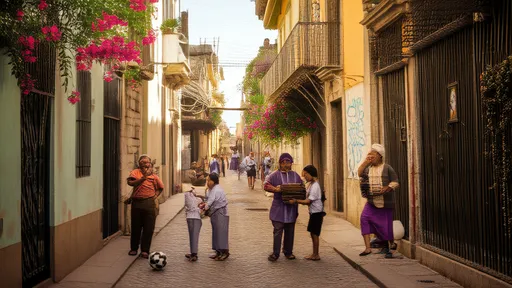
The contrast between tourist zones and residential neighborhoods is striking. Along Pub Street and the riverside, English menus and souvenir shops dominate. But just a few blocks away, in neighborhoods like Wat Bo and Svay Dangkum, life unfolds in Khmer. Families gather around low tables for evening meals, elders fan themselves on plastic stools, and dogs nap in the shade of mango trees. These areas are not curated for visitors—they are lived in. And it is here, away from polished storefronts and guided tours, that Siem Reap reveals its true character: resilient, warm, and deeply rooted in community.
This duality—between global attraction and local life—defines the city’s identity. The temples may anchor Siem Reap on the world map, but its soul pulses in the everyday. Understanding this distinction is the first step toward meaningful exploration. To truly know a place, one must move beyond the monument and embrace the mosaic of moments that make it real.
Phsar Leu: More Than Just a Market
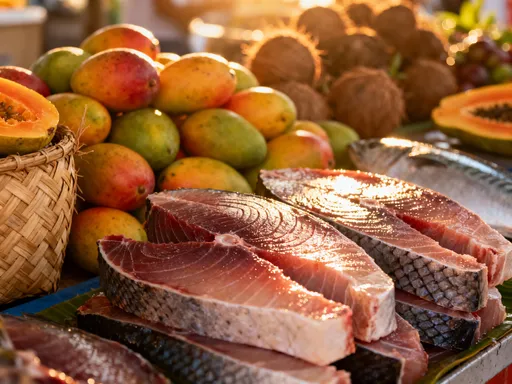
West of the Siem Reap River, beyond the reach of most tourist maps, lies Phsar Leu, a sprawling market that serves as both economic engine and social anchor for the surrounding neighborhoods. Unlike the orderly stalls of the central market, Phsar Leu is a sensory explosion—rows of pungent durian stacked beside baskets of crimson rambutan, the tang of fermented fish paste mingling with the sweetness of ripe pineapple. Vendors call out in rapid Khmer, their voices rising above the clatter of motorbikes and the rhythmic thud of cleavers chopping meat.
This is not a market designed for visitors. There are no English price tags, no souvenir trinkets, no photo ops staged for Instagram. Instead, Phsar Leu operates on the currency of necessity and connection. A woman in a wide-brimmed hat bargains for bundles of lemongrass, while a farmer in rubber boots haggles over the price of free-range eggs. Children weave through the aisles, chasing each other past pyramids of taro root and mounds of sticky rice wrapped in banana leaves. Every transaction here is embedded in relationships—vendor and customer often know each other by name, their exchanges laced with laughter and shared history.
The market’s significance extends beyond commerce. It is a place where information flows as freely as goods—news of weddings, funerals, and job opportunities spreads from stall to stall. Elders gather under the shade of canvas awnings to discuss village affairs, while young apprentices learn the art of spice blending from seasoned cooks. The market is also a repository of Cambodian culinary heritage. Rare ingredients like kaffir lime leaves, galangal, and prahok—a pungent fermented fish paste used in nearly every Khmer dish—are sourced here, preserving flavors that might otherwise fade in the face of globalization.
For the curious traveler, Phsar Leu offers a rare window into authentic daily life. But it demands respect. Visitors should move quietly, avoid intrusive photography, and ask permission before taking pictures of individuals. A simple smile and a polite “soksabay te?” (Are you well?) in broken Khmer can open doors more effectively than any camera lens. To experience Phsar Leu is not to observe, but to witness—a humble participant in a system that has sustained families for generations.
The Old French Quarter: Where History Meets Modern Life
Nestled between the river and the old town, the French Quarter stands as a quiet testament to Siem Reap’s layered past. Built during the colonial era, its low-rise villas feature shuttered windows, arched doorways, and wide verandas draped in bougainvillea. The architecture speaks of a time when French Indochina left its mark on urban design—elegant, shaded, and built for slower rhythms. Today, these structures house a mix of cafes, boutique hotels, and family-run businesses, their peeling paint and weathered wood telling stories of time and resilience.
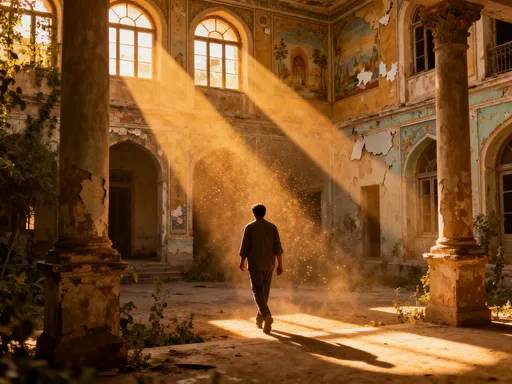
Walking through the French Quarter feels like stepping into a liminal space—neither fully preserved nor entirely abandoned. A restored villa might host a French-Cambodian fusion restaurant with linen tablecloths and curated wine lists, while next door, a tailor sits cross-legged on the floor, sewing traditional sampot fabric by hand. The contrast is not jarring, but conversational—a dialogue between past and present, tourism and tradition. The district’s charm lies in its imperfections: cracked stucco, rusted railings, and trees growing through abandoned courtyards, their roots cracking the concrete in quiet rebellion.
Gentrification is an inevitable undercurrent. As property values rise, some long-term residents have been displaced, their homes converted into upscale guesthouses or art galleries. Yet, unlike in other tourist cities, the transformation in Siem Reap has been relatively gradual. Many original families remain, adapting to change without losing their footing. Local tailors, herbalists, and woodcarvers continue to serve both residents and visitors, their shops tucked between renovated facades. This balance—between preservation and progress—is fragile, but it persists.
The French Quarter invites contemplation. It is not a museum piece, but a living neighborhood where history is not frozen, but folded into daily life. To sit on a shaded bench with a cup of strong Cambodian coffee, watching a grandmother sweep her porch while a teenager texts on a motorbike nearby, is to witness continuity. The past is not gone—it is simply wearing new clothes.
Kandal Village: The Creative Heartbeat
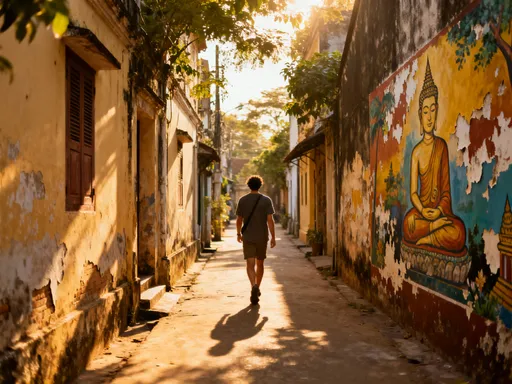
A short walk from the French Quarter lies Kandal Village, once a quiet residential area that has quietly evolved into Siem Reap’s creative nucleus. Narrow lanes lined with mango trees now host pop-up galleries, bamboo cafes, and studios where young Cambodian artists experiment with traditional motifs in contemporary forms. Murals depicting lotus blossoms, mythological figures, and abstract patterns adorn the walls of old shophouses, their vibrant colors a bold statement of cultural reclamation.
Kandal’s transformation is driven by a new generation of Cambodians—designers, musicians, and entrepreneurs—who are redefining what it means to be Khmer in the 21st century. Many are descendants of families affected by the Khmer Rouge era, and their work often carries subtle undertones of memory and resilience. A textile artist might weave stories of ancestral villages into modern scarves, while a muralist paints scenes of daily life that honor the quiet dignity of ordinary people. These expressions are not political, but deeply personal—a quiet assertion of identity and pride.
The village hosts monthly art walks and weekend markets where visitors can meet creators, sip locally brewed iced tea, and purchase handmade goods. These events are not commercial spectacles, but community gatherings. Children play badminton in the street while elders watch from folding chairs, and musicians strum traditional instruments under string lights. The atmosphere is relaxed, inclusive, and refreshingly free of pretension. It is a space where art is not elevated on pedestals, but woven into the fabric of everyday life.
Kandal Village represents a hopeful vision for urban development—one where creativity and heritage coexist, and where young people are not drawn to foreign ideals, but inspired to reinterpret their own. For travelers, it offers a rare opportunity to engage with living culture, not as spectators, but as participants in a quiet cultural renaissance.
The Role of Walking: Rediscovering the City at Ground Level
In a city where most tourists rely on tuk-tuks and rental bikes, walking is an act of resistance—a deliberate choice to slow down and see more. Siem Reap reveals its secrets not from the seat of a vehicle, but at ground level, where every cracked sidewalk and overhanging branch tells a story. Foot travel allows for spontaneity: a sudden turn down an alley leads to a hidden temple courtyard, where a monk rings a bronze bell at sunset; a forgotten doorway opens to a family garden bursting with jasmine and chili plants.
The rhythm of walking aligns with the rhythm of the city. Morning is the best time to explore—before the heat sets in, the streets come alive with activity. Women carry baskets of bread to roadside stalls, students in blue uniforms pedal to school, and street dogs stretch in the warm pavement. By midday, the pace slows, and the city retreats into shade. But in the late afternoon, life returns—families gather for iced coconut water, and elders play chess on low tables beneath banyan trees.
Walking also fosters connection. A simple greeting, a shared laugh over a mispronounced word, or a moment of eye contact can lead to unexpected invitations—into a home for tea, to a neighborhood festival, or to a small shrine where incense curls into the evening air. These encounters are not transactions; they are moments of human recognition. Travelers who walk with intention—heads up, phones down—often find that Siem Reap gives back in quiet, meaningful ways.
Safety is generally not a concern, but mindfulness is essential. Visitors should stay on well-traveled paths, avoid entering private properties without invitation, and dress modestly out of respect. The goal is not to document every corner, but to be present in the ones you find. As one local guide once said, “You don’t need to see everything. You just need to see deeply.”
Local Eats: Flavor as a Cultural Compass
In Siem Reap, food is not an accessory to travel—it is the compass. Every neighborhood has its culinary signature, passed down through generations and shaped by seasonal availability and family tradition. While tourist restaurants serve adapted versions of Khmer dishes, the most authentic flavors are found in unmarked stalls and family-run eateries tucked into alleyways and market corners.
A morning visit to a local breakfast spot might yield kuy teav—a delicate pork and rice noodle soup simmered for hours with star anise and garlic, topped with fresh herbs and crispy shallots. At lunch, a roadside grill might offer smoky grilled fish marinated in turmeric and lemongrass, served with a spicy green mango salad. Evenings bring communal dishes like amok—a creamy coconut fish curry steamed in banana leaves—and sour tamarind soup that awakens the palate with its bright tang.
For dessert, hidden gems abound. An elderly woman might sell palm sugar pancakes from a cart near a temple gate, her hands moving with practiced ease as she pours batter onto a hot griddle. Another stall could offer sticky rice with ripe mango, a simple dish elevated by the quality of its ingredients. These meals are not presented on white plates with artistic garnishes—they are served on plastic trays, eaten with hands or chopsticks, and enjoyed on low stools under fluorescent lights.
To eat like a local requires courage and curiosity. Travelers should look for stalls with long lines of Cambodians, a reliable indicator of quality. Hygiene varies, but many vendors maintain clean practices—washing hands, covering food, and using fresh ingredients. When in doubt, opt for cooked-to-order dishes and bottled water. Learning a few Khmer phrases—“chhnang ah?” (How much?), “awkun sot” (no spice)—can go a long way in building rapport. More than just sustenance, these meals are acts of cultural exchange, where flavor becomes a bridge between strangers.
Preserving Authenticity: Tourism with Respect
As more travelers venture beyond Angkor Wat, the impact on Siem Reap’s neighborhoods grows. While increased attention can bring economic benefits, it also risks eroding the very authenticity that draws visitors in the first place. The challenge lies in engaging with these communities without turning them into exhibits or disrupting their way of life.
Respectful tourism begins with awareness. Photography, while tempting, should never be invasive. Capturing images of people—especially children and elders—should be done with permission and a smile, not a lens pointed from a distance. Some families welcome photos; others prefer privacy. A simple nod or gesture can clarify intent. More importantly, travelers should avoid staging scenes or encouraging performative behavior for the sake of a photo. Real life is not a performance.
Supporting local businesses is another key practice. Choosing family-run guesthouses over international chains, buying crafts directly from artisans, and dining at neighborhood stalls ensures that tourism dollars stay within the community. Small actions—like learning a few words of Khmer, removing shoes before entering a home, or accepting a cup of tea with both hands—signal respect and openness.
Several local initiatives are working to promote sustainable urban tourism. Organizations like the Siem Reap Local Experience Project offer guided neighborhood walks led by residents, with proceeds funding community development. These programs emphasize reciprocity—visitors learn, and locals benefit. The message is clear: these are not tourist zones, but homes. The goal is not to extract experiences, but to build understanding.
Tourism, at its best, is a two-way exchange. When travelers approach Siem Reap’s hidden streets with humility and curiosity, they don’t just see a city—they connect with it. And in that connection, both visitor and host are enriched.
Siem Reap’s streets tell stories no guidebook can fully capture. By stepping off the main paths, travelers don’t just see a city—they connect with it. The true wonder lies not in perfection, but in the raw, real moments between landmarks. Exploring its neighborhoods isn’t just rewarding; it’s a reminder that discovery begins where the crowd ends. In the quiet alley where a grandmother fries bananas, in the mural painted by a young artist reclaiming her heritage, in the shared silence of a morning market—these are the moments that linger. They remind us that travel is not about collecting sights, but about opening ourselves to the world, one step, one smile, one shared meal at a time.